
Who Is Physiotherapist Zeynep Çalışkan?
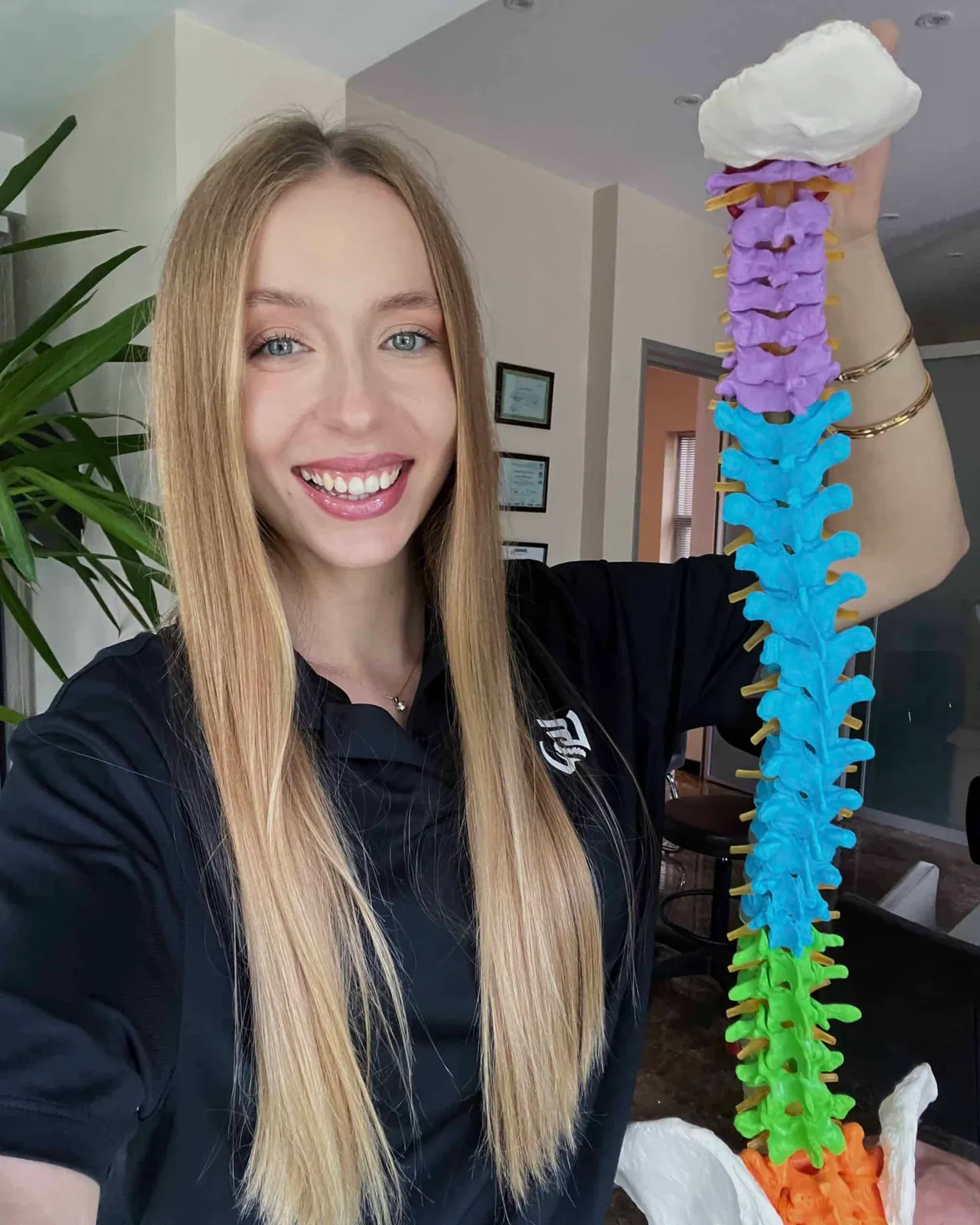
· Scoliosis & Schroth Therapy
For people who receive a scoliosis diagnosis, the process usually begins as a journey marked by uncertainty and the need for long-term planning. Zeynep Çalışkan is a physiotherapist who, aware that this process is about far more than exercises alone, approaches scoliosis holistically and places real weight on assessment and follow-up.
Most of the people who come to our clinic are those who, after their physicians recommended Schroth-based exercises, began looking for a physiotherapist working in scoliosis. The aim of that search is not simply to find somewhere that runs exercises, but to move forward with a physiotherapist who understands the structure of scoliosis and can plan the assessment and follow-up process.
The assessment process
The first step of a sound scoliosis journey is a detailed assessment. For this reason, the first appointments include a comprehensive assessment lasting around 40–50 minutes. This covers the overall alignment of the spine, trunk asymmetries, rotation findings, spinal flexibility and postural characteristics.
Any previous evaluations carried out under a physician’s care help in understanding the process. For those wondering how the degree of scoliosis is evaluated, our article on scoliosis degrees and the Cobb angle is a useful guide. At this stage, the client and their family are informed transparently and realistically about the structure of scoliosis, its likely course and the place of physiotherapy in this journey.
The approach
The physiotherapy process in scoliosis is planned with the person’s age, stage of growth, spinal characteristics and daily-life needs in mind. In children and adolescents in particular, whether growth is continuing matters, because the curvature can increase during the growth years. For families, our articles Why scoliosis progresses in children and Your child has a scoliosis diagnosis: what now? help in understanding the process.
At the heart of the approach is building an individual follow-up and exercise plan, rather than applying the same exercises to everyone.
Bracing and follow-up
In some scoliosis cases, brace use may come onto the agenda in line with a physician’s evaluation. The role of physiotherapy here is to support the person in managing brace use more consciously and in fitting it into daily life and the exercise process. For details, see our article on bracing in scoliosis.
The frequency of follow-up is planned according to the person’s needs; two sessions a week is the most common pattern. Posture and trunk measurements are re-evaluated at set intervals, and the person’s response to the process is observed. Follow-up, which proceeds alongside physician check-ups, can be reshaped over time. The aim is to notice changes early and keep the process under control.
The approach in adult scoliosis
In adults, scoliosis can present with pain and restricted movement at times. In these situations, the process is planned around the person’s complaints; where needed, an approach supported by manual therapy can be followed by exercise-based work. On the relationship between sport and exercise, our article Does swimming help scoliosis? answers the most common questions.
The Schroth approach and exercise follow-up
Schroth-based exercises are one of the approaches most often used in scoliosis care; however, how they are applied differs from person to person. This is why it matters that the exercises are planned according to the assessment findings and updated regularly. For details of the method, see our article What is Schroth therapy?
The importance of motivation
Scoliosis care is a process that requires patience and consistency, and it can be demanding not only physically but emotionally. For this reason, clients’ engagement and motivation are treated as an important part of the physiotherapy process. Growing posture awareness, improving movement control and getting to know one’s own body better are among the gains of this journey.
Scoliosis-focused clinical work and training
Zeynep Çalışkan continues her clinical work with a primary focus on scoliosis. Following current developments in the field, she has taken part in a range of national and international training programmes. She brings together her training in ISST Schroth above all, along with the Lyon Method, SSOL and DNS, according to each client’s needs in clinical practice.
Today, at our clinic in Beşiktaş, she continues physiotherapy and exercise-based follow-up with people who have a scoliosis diagnosis. You are welcome to contact us for an assessment.