
What Is Schroth Therapy and How Is It Applied?
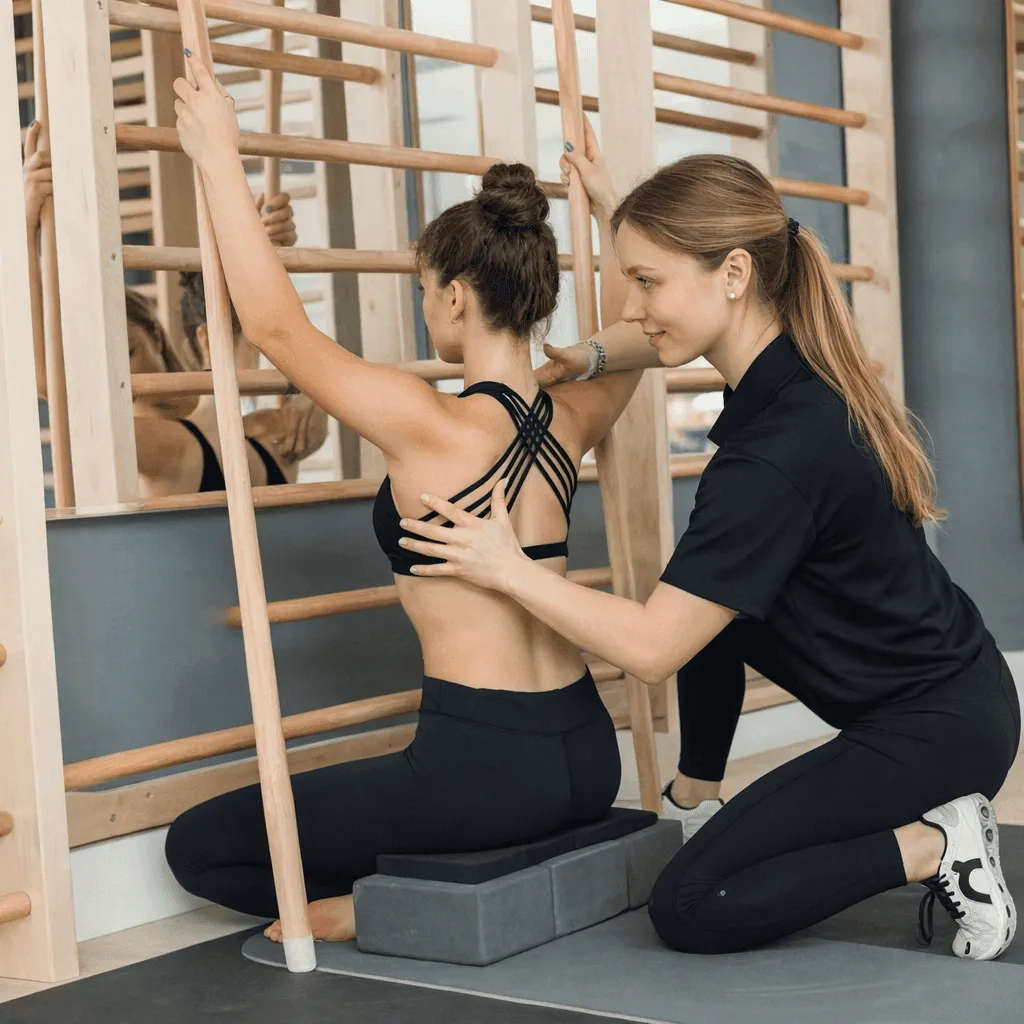
· Scoliosis & Schroth Therapy
Schroth therapy is a scoliosis-specific physiotherapy approach used in scoliosis, based on three-dimensional exercise principles. It is a non-surgical (conservative) method and is defined in international guidelines as part of the conservative management of scoliosis. The method was first developed in Germany by Katharina Schroth and was systematised by later generations.
The principles of Schroth therapy
Three core elements stand out in the Schroth approach:
- Postural auto-correction: A curvature-specific posture correction that aims to bring the spine closer to the midline.
- Three-dimensional breathing: Using the breath to expand the areas of the chest that close down as a result of the curvature.
- Muscle activation and stabilisation: Training the muscles that will hold the corrected posture; supporting weakened muscles and stretching tight ones.
The goals of the approach
Goals are set according to the person’s stage of growth. In growing children and adolescents, the priority is to slow the progression of the curvature; in appropriate cases, the goal is to work towards reducing the degree of the curve. In adults, posture, trunk symmetry, breathing, addressing pain where present, and quality of life come to the fore. In both cases, the programme is built on the regular monitoring of clinical findings, supporting posture and trunk symmetry, and increasing posture awareness in daily life.
How is it applied?
Schroth therapy is planned individually for each person and generally includes the following steps:
- Individualised assessment: Posture analysis, and the evaluation of trunk asymmetry and rotation findings. The degree of the curvature (the Cobb angle) is assessed by a physician through radiological review. For details, see our article on scoliosis degrees and the Cobb angle.
- Exercise in three planes: Curvature-specific exercises that address not only the sideways component of the spine, but also the front-to-back and rotational components.
- Breathing work: Breathing techniques aimed at opening the closed-down breathing areas and lengthening the trunk.
- Mirrors and visual feedback: Watching and tracking one’s own posture, which builds accurate posture awareness.
The scientific framework
Schroth is one of the scoliosis-specific exercise approaches (known in the literature as PSSE) and is recognised in international guidelines as a component of conservative management. Scientific studies have reported improvement in the Cobb angle in appropriate cases, and scoliosis-specific exercises have been observed to contribute to a more stable course of the curvature and to supporting posture. These findings are an evidence-based framework, not an individual promise; results vary from person to person and from process to process.
Who is it suitable for?
The Schroth-based approach can be applied to children, adolescents and adults with a scoliosis diagnosis, adapted to the person’s curve pattern and goals. It can also be part of the physiotherapy process before or after surgery.
The home programme and consistency
Exercises done at home, outside the sessions, are an important part of the process. Performing the exercises with correct form, working in front of a mirror and regular follow-up all contribute to maintaining the gains achieved.
When carried out regularly and under the guidance of an experienced physiotherapist, Schroth therapy is a supportive approach in the management of scoliosis. For details, see our Scoliosis and Schroth Therapy page; you are welcome to contact us for an assessment.