
Bracing in Scoliosis: Proper Use and Follow-Up
· Scoliosis & Schroth Therapy
Brace use in scoliosis is a different process for every person. With the right timing, a custom-made brace and multidisciplinary follow-up, it can contribute to the management of scoliosis during the growth years. In this article, we look at who bracing is for and how it should be used.
When is a brace used?
In scoliosis, a brace generally comes onto the agenda for curves between 20 and 40 degrees. If the curvature is below 20 degrees, exercise and regular check-ups alone are usually recommended. If the curvature is above 20 degrees — and particularly if the child’s growth potential continues — a brace may be recommended to help limit progression.
During adolescence, the spine lengthens rapidly and the risk of progression rises. This is exactly where the brace comes in; by supporting the spine, it aims to limit any further increase in the curvature. The purpose of a brace is not to undo the curvature entirely, but to help keep its progression under control during the growth period.
Is a brace applied the same way for everyone?
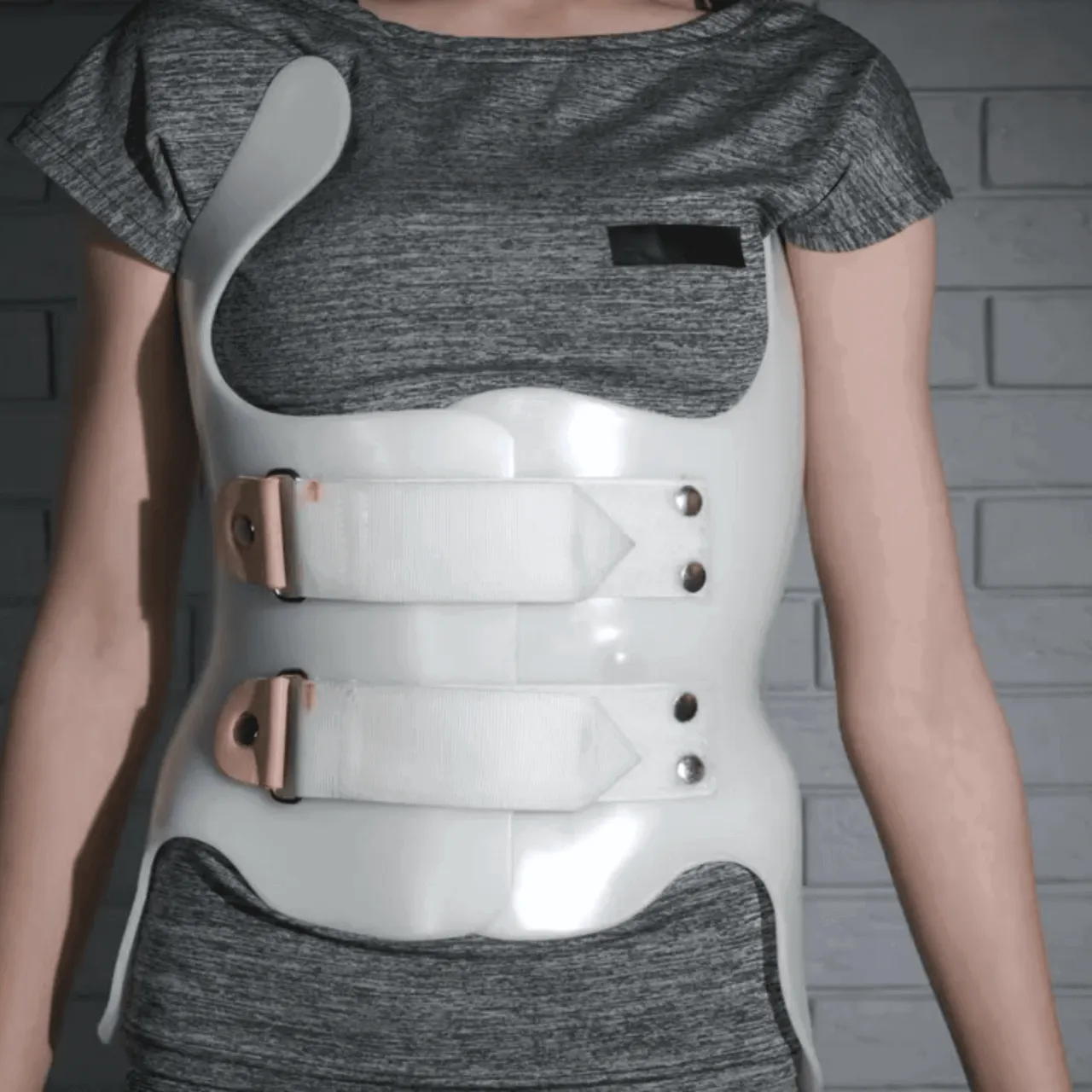
A scoliosis brace is a custom-made device. Every person’s spinal curvature is different; its location, degree and direction vary. For this reason, three-dimensional measurements are taken and a brace is designed for the individual. One of the methods commonly used today is custom brace production with CAD-CAM technology; this improves the fit of the brace to the body and makes it more comfortable in daily life.
The importance of a multidisciplinary approach
In scoliosis, a brace is not sufficient on its own. For a holistic result, the process is carried out in collaboration between the physician, the physiotherapist and the orthotist:
- The physician: Evaluates the degree of the curvature and the suitability of bracing, and plans the wearing time.
- The physiotherapist: Organises the exercise programme carried out alongside the brace. Scoliosis-specific methods such as Schroth, in particular, reinforce the effect of the brace.
- The orthotist: Takes the measurements for the individually fitted brace, produces it and makes the necessary adjustments during use.
Thanks to this approach, mobility is preserved and the process is handled holistically.
What to pay attention to during use
Brace treatment requires patience and routine. The recommended daily wearing time is generally in the range of 16–23 hours; this can vary from person to person, but consistent use is important for the brace to be effective. In addition:
- The skin should be checked for irritation while the brace is worn.
- The brace should be supported with exercise and physiotherapy.
- Physician check-ups should not be missed, and the effect of the brace should be monitored regularly.
One of the most common challenges is adherence. Here, it matters that the brace is custom-designed and that the family and the care team support motivation.
The importance of exercise alongside the brace
While the brace supports the spine from the outside, exercise trains the person’s own muscles. Scoliosis-specific exercise programmes such as Schroth support the bracing process. Breathing control, posture awareness and posture-focused work make managing scoliosis easier, both while wearing the brace and when out of it.
In summary
Applied at the right time and in the right way, bracing in scoliosis is an important method for helping limit the progression of the curvature. To be effective, it needs to be custom-designed and carried out in collaboration between the physician, physiotherapist and orthotist. Scoliosis care is not a single method; exercise, regular follow-up and, where needed, other options can all be part of the process. For the scoliosis-specific exercise approach, see our article What is Schroth therapy? — you are welcome to contact us for an assessment.