
Your Child Has a Scoliosis Diagnosis: What Now?
· Scoliosis & Schroth Therapy
If your child has received a scoliosis diagnosis, it is natural to feel worried. On hearing the news, many parents face questions such as “Will the curvature get worse?”, “Will surgery be needed?” or “Will it improve with exercise?” In this period, the most important step is reaching accurate information and following professional guidance. The first thing to know is this: scoliosis that is recognised early and followed appropriately can usually be managed without surgery.
What is scoliosis?
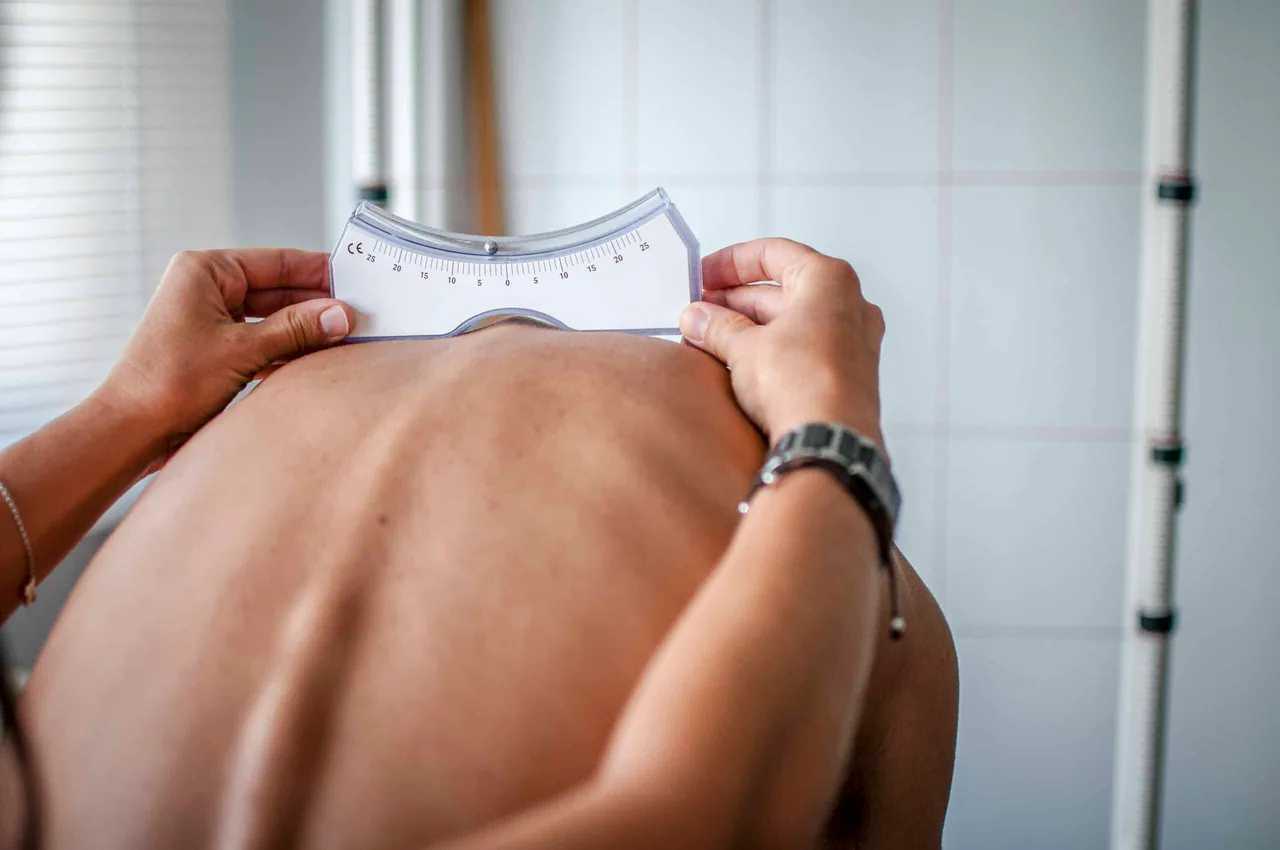
Scoliosis is a three-dimensional spinal curvature in which the spine bends sideways, and it is usually noticed in childhood or adolescence. Viewed from the front, the spine normally gives the impression of a straight line; in scoliosis, this line curves into an “S” or “C” shape. This can lead to asymmetry in the shoulders or hips. The cause is most often idiopathic; periods of rapid growth and muscle imbalances can contribute to progression. Regular physician check-ups and physiotherapist assessments are important for determining the degree and monitoring progression.
The first steps after diagnosis
The first step after diagnosis is to plan the process rather than panic. The physician draws up a road map according to the degree of the curvature: in some cases only monitoring is recommended, while curves at risk of progression begin a physiotherapy-based process.
At this point, individualised exercise programmes matter, because every scoliosis curve is different. The direction and degree of the curvature, the flexibility of the spine and the child’s build shape the programme. The parent’s active involvement is also decisive: doing the home exercises regularly, keeping up with check-ups and maintaining motivation truly pay off over the long term.
Schroth therapy: a scoliosis-specific approach
Schroth therapy is one of the scoliosis-specific, scientifically grounded conservative (non-surgical) approaches used in scoliosis. It addresses the spine in three dimensions and aims to support muscle balance through individualised corrective exercises. The exercises use special breathing techniques, mirror work and positioning.
The programme is planned according to the child’s age, the degree of the curvature and their body awareness; it is supported in sessions and continued at home. With regular follow-up, the aim is to support posture and trunk symmetry; in appropriate cases, improvement in the Cobb angle has been reported in scientific studies. For details, see our Scoliosis and Schroth Therapy page.
When is a brace needed?
A brace is generally recommended for curves between 20 and 40 degrees, alongside a physician’s evaluation. In children who are still growing, a custom-made brace provides support in the direction opposite to the curvature, aiming to limit its progression, and reinforces the effect of Schroth therapy. A brace is not a solution on its own; applied together with physiotherapy, muscle balance is preserved and body awareness improves. The decision is made through the joint evaluation of the orthopaedic physician and the physiotherapist. For details, see our article on bracing in scoliosis.
Patience, routine and follow-up over the long term
In scoliosis care, progress is not achieved in a day; the process takes time and commitment. Doing the exercises regularly, keeping up with check-ups and following the physiotherapist’s recommendations are the most critical points. A scoliosis diagnosis is not an ending — it is the beginning of a process managed with regular monitoring. In cases recognised early, Schroth and well-managed bracing can help reduce the need for surgery.
We covered the factors that affect progression in our article on why scoliosis progresses in children. You are welcome to contact us to plan the process together.