
Is My Child's Poor Posture a Sign of Scoliosis?
· Scoliosis & Schroth Therapy
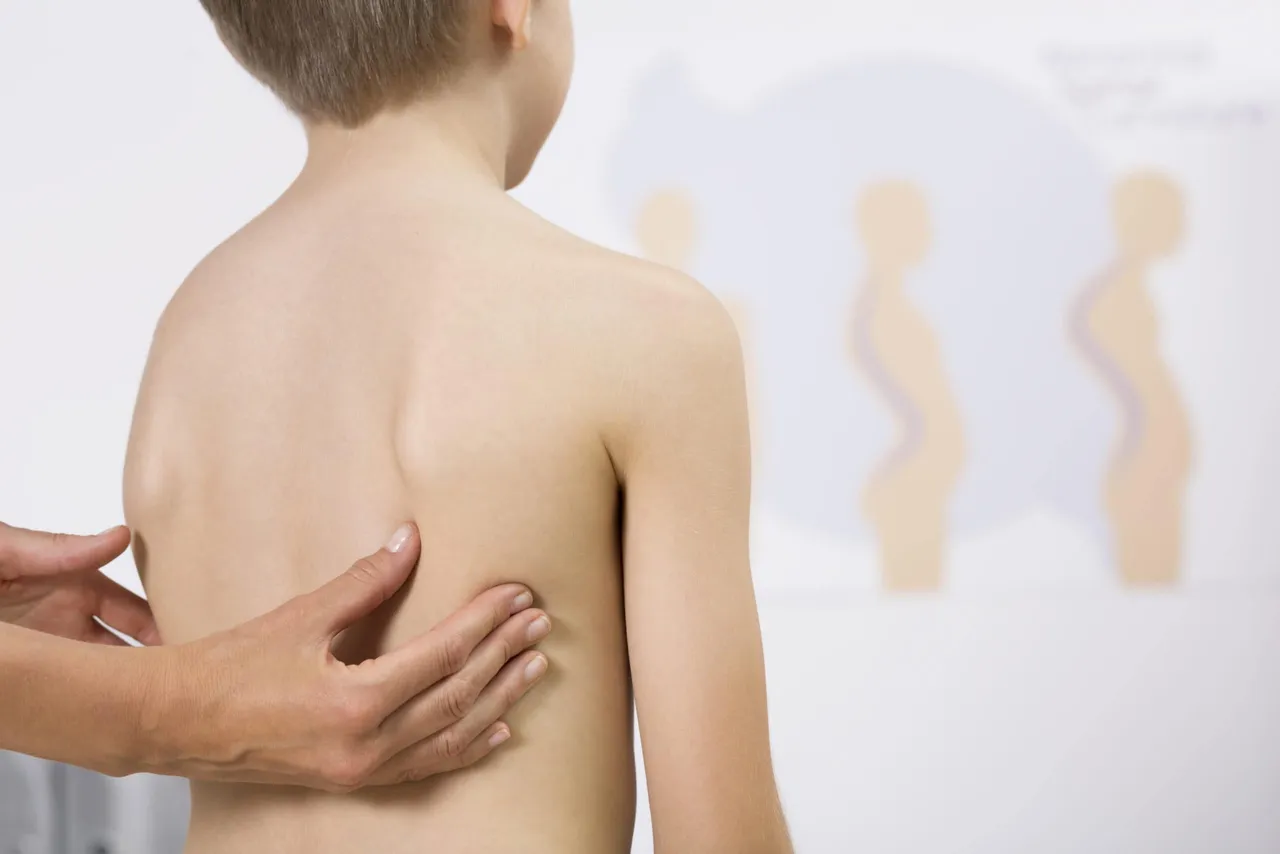
Noticing that your child’s posture looks unusual can be worrying. A visible height gap between the shoulders, hip asymmetry or a sense of curvature in the back brings scoliosis to mind first. So can these changes really point to scoliosis? In this article, we look at the relationship between poor posture and scoliosis in children, and why early assessment matters.
What is scoliosis, and why does it develop?
Scoliosis is a three-dimensional spinal curvature in which the spine bends sideways and rotates around its own axis. It is most often noticed between the ages of 10 and 16, and in this age group it is called “adolescent idiopathic scoliosis”. Because rapid growth occurs during this period, curves can become more noticeable. The exact cause is often unknown; genetic factors, faster growth and muscle imbalances can play a role. What matters is this: when scoliosis is recognised early, the process can be monitored and managed more easily.
Can poor posture be a sign of scoliosis?
Not every postural problem is scoliosis; however, some visible changes can be early findings. A parent’s observation is valuable for early recognition.
Signs you can notice at home
- One shoulder appearing higher than the other
- Asymmetry at hip level
- An impression of an “S” or “C” shaped curve when looking at the back
- One shoulder blade appearing more prominent
- The body appearing shifted to one side when standing
- A raised area on one side of the back in the forward bend test (the Adams test)
If several of these signs appear together, it is appropriate to see a physician or physiotherapist.
How is a scoliosis diagnosis made?
The physician clinically evaluates the child’s posture and spinal alignment; a standing full-spine X-ray is usually requested. On this image, the Cobb angle is measured to determine the degree of the curvature. As a general framework:
- Below 10°: a posture-related change or a mild curve
- 10–25°: monitoring and Schroth exercises
- 25–40°: bracing and Schroth, alongside a physician’s evaluation
- Above 40°: surgical evaluation may come onto the agenda
The decision is made by weighing the child’s growth potential and the curve’s risk of progression together. You can consult your physician and physiotherapist to plan the process properly. We covered the path to follow after diagnosis in our article Your child has a scoliosis diagnosis: what now?.
Schroth therapy: an individualised approach
Three-dimensional Schroth therapy — one of the scoliosis-specific, scientifically evaluated approaches used in scoliosis — is built on curvature-specific posture correction (auto-correction), balancing the trunk muscles and breathing control. It is recognised as part of conservative management within the international guideline framework.
When practised regularly, the Schroth-based programme is carried out within a framework aimed at slowing and managing the progression of the curvature; in cases where a brace is needed, it supports the bracing process. For details, see our article What is Schroth therapy?.
When does a brace come onto the agenda?
A brace is recommended particularly for curves between 25 and 40 degrees, where the physician considers it appropriate, and it is planned together with Schroth therapy rather than on its own. Its purpose is to help limit the progression of the curvature, support the growth period and hold the spine in a suitable position. For details, see our article on bracing in scoliosis.
Early assessment matters
The most critical element in scoliosis is early recognition and the right guidance. Even a small change in posture can be a starting point for an assessment. Three things for families to remember: arrange an assessment when a postural change is noticed; the process is individual and requires regular follow-up; and, where needed, Schroth and bracing are planned together. You are welcome to contact us for an assessment.