
Can Scoliosis Improve? Treatment Goals
· Scoliosis & Schroth Therapy
For people and families encountering scoliosis for the first time, the most common question is usually the same: “Can scoliosis improve?” There is no single, definitive answer, because it depends on the person’s age, skeletal maturity and the characteristics of the curvature. In this article, we address the question within a scientific framework and in honest language.
The short answer
The aim of evidence-based physiotherapy for scoliosis is not the complete correction of the curvature. Instead, the goals are to help slow and manage the progression of the curvature, to support posture and trunk symmetry, and to improve quality of life. In growing children and adolescents, the priority is slowing progression; in appropriate cases, we also work towards reducing the degree of the curve. In adults, the goals that come to the fore are posture, function, addressing pain where present, and quality of life.
What is scoliosis, and why does it progress?
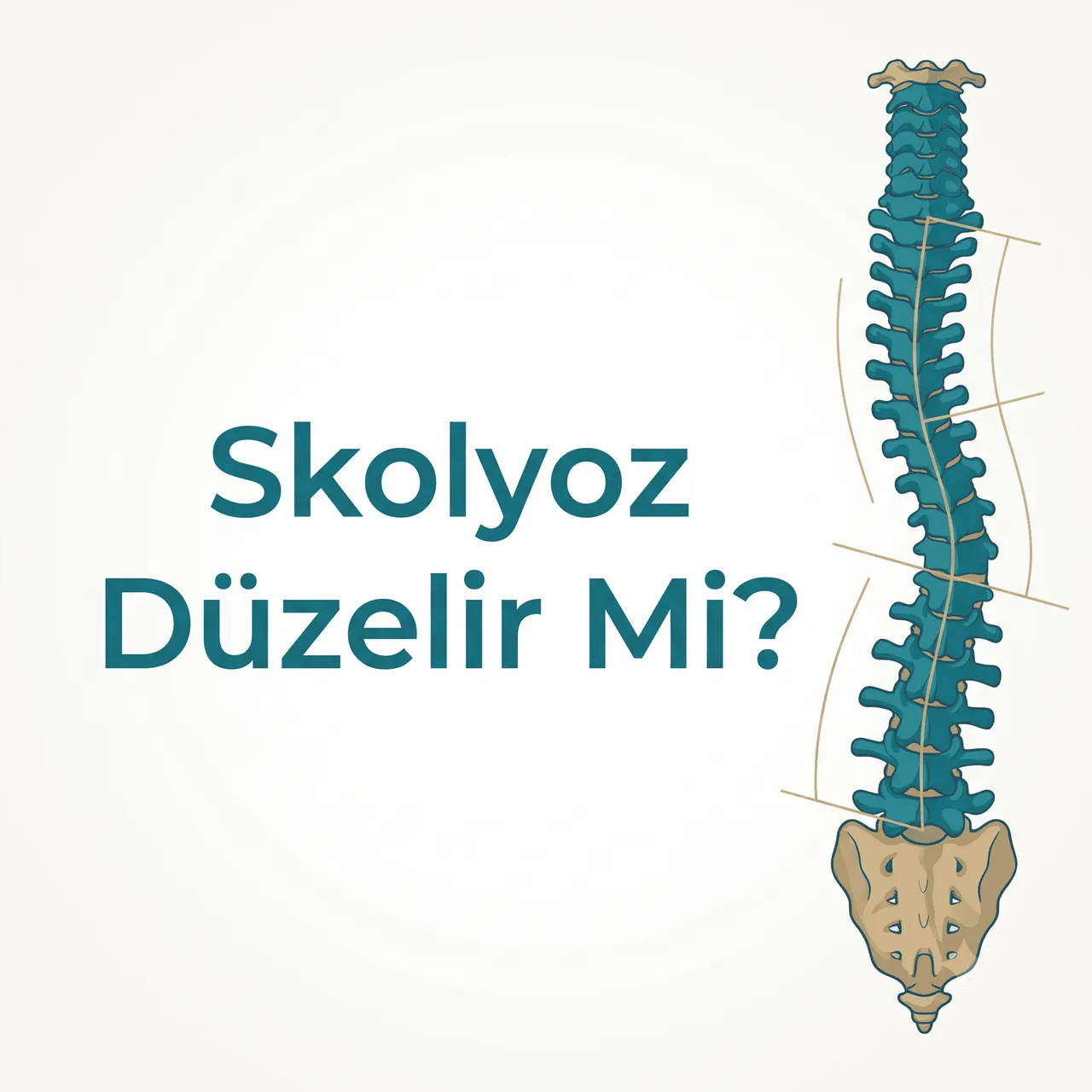
Scoliosis is a three-dimensional spinal curvature in which the spine not only bends sideways but also rotates around its own axis. The most common form is the idiopathic type, whose cause is not fully known, and it is usually noticed during the growth period.
The likelihood of progression increases particularly during periods of rapid growth. This is why regular follow-up matters in children and adolescents: the curvature can change over time until skeletal maturity is reached. In adults who have reached skeletal maturity, the rate of progression usually slows; however, posture, balance and, at times, pain can become relevant.
The goal in children and adolescents: slowing progression
While growth continues, the core priority is working to slow the progression of the curvature. International guidelines define scoliosis-specific exercises (known in the literature as PSSE) as part of conservative management in appropriate cases. At certain degrees of curvature, and where growth potential continues, a brace (such as Rigo-Chêneau) may accompany the exercise programme, alongside a physician’s evaluation.
During this period, the process is carried out with regular monitoring of clinical findings; radiological review is guided by a physician. The aim is to follow the course of the curvature closely, to help slow its progression and, in appropriate cases, to work towards reducing the degree of the curve.
The goal in adults: posture, pain and quality of life
In adults who have reached skeletal maturity, the approach is somewhat different. In this group, the priorities are supporting posture and trunk symmetry, maintaining function, addressing pain where present, and improving quality of life. Supporting breathing mechanics and building posture awareness in daily life are also part of these goals.
Effects on quality of life can be monitored with scales such as the SRS-22. This means the process is evaluated not only by the degree of the curvature, but also by the person’s wellbeing in daily life.
What does the scientific framework say?
The conservative management of scoliosis is a field defined within the international scientific framework. Scoliosis-specific exercises are part of this management in appropriate cases, and have generally been found more supportive when combined with bracing than bracing alone.
Scientific studies have reported improvement in the Cobb angle in appropriate cases; some studies have observed a more stable course of the curvature in groups working with scoliosis-specific exercises. The key point is this: these findings are an evidence-based framework, not an individual promise. Because every person’s curve pattern and response is different, results vary from person to person and from process to process.
The Schroth-based approach
Schroth is a scientifically evaluated approach among scoliosis-specific exercises. At its core are three-dimensional posture correction, stabilisation of the corrected posture and curvature-specific breathing work. The approach is not a ready-made list of exercises; it is adapted to the curve pattern, age group and the person’s goals.
At our clinic, we complement the Schroth-based programme with approaches that train the deep supporting muscles of the trunk; the aim is for the corrected posture gained to be maintained more stably in daily life. You can find the details on our Scoliosis and Schroth Therapy page.
When should an assessment be arranged?
If there is asymmetry at shoulder or waist level, a prominence on one side of the back that becomes more noticeable when bending forward, or a previously noticed curvature, an assessment is worthwhile. Particularly in growing children, early recognition makes the follow-up process easier.
The answer to “Can scoliosis improve?” becomes clear not in a single sentence, but through an individual assessment. When the course of the curvature, age, stage of growth and clinical findings are considered together, the goals and approach that suit you can be determined. You are welcome to contact us for an assessment.